Step 4: Hold a Creation!
How do you hold a piece of history in your hands? An activity for students who may be visually impaired.
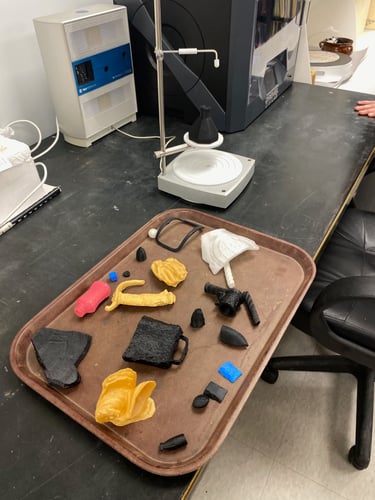
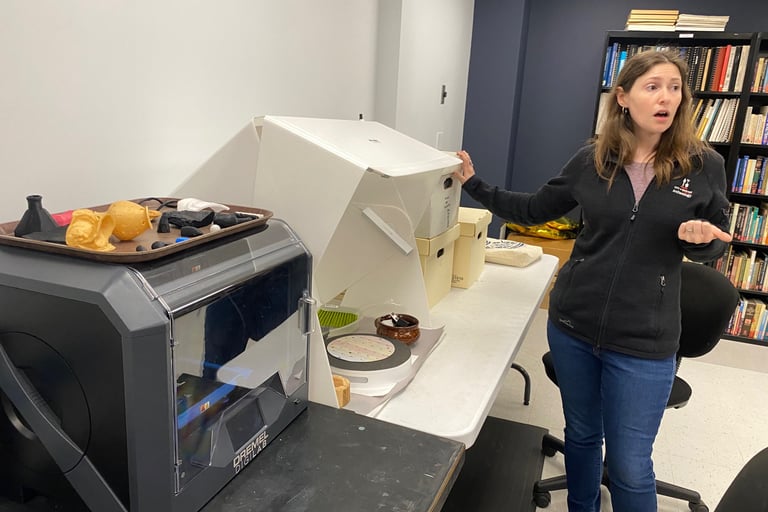
Real creations excavated from the ground are very delicate. They can fall apart. Archaeologists use laser scanners to make 3D prints of precious creations.
We visited archaeologist Nadia Kline at the Boston City Archaeology Center.
This is the room where she uses a laser scanner to make digital files of the artifacts.
In this picture on the right, you see Nadia's laser scanner. It is the white machine near the top with the arm holding a small black pot.
The 3D printer is the black box behind it.
Nadia shared some of the 3D prints she has already made. They are on the tray. Can you guess what some of them are?
The oldest artifact ever discovered in Boston was found at Frog Pond in Boston Common!
A pottery sherd is a piece of pottery that has been broken. They usually have patterns or drawings on them.
Pottery sherds can help archeologists find out what people cooked, how they stored it and what they made them out of.
There is a 3D print in Field Trip in a Box that looks like this.
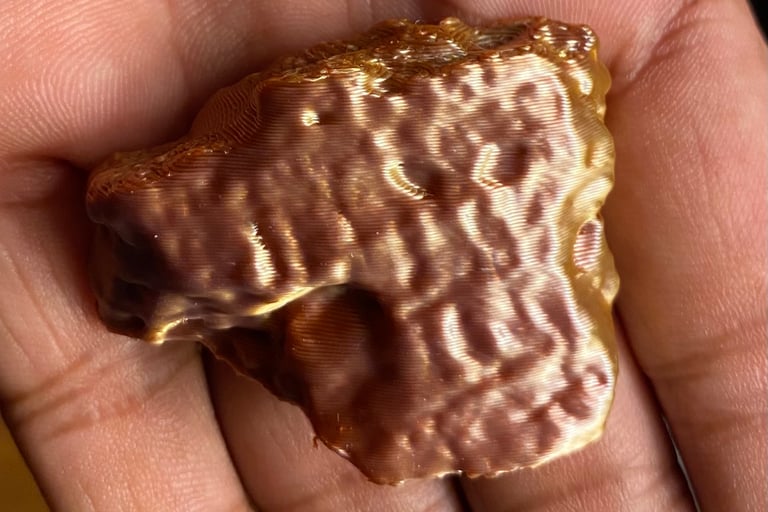
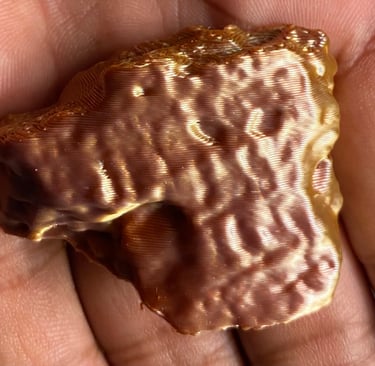
This print is near identical replica of one of the oldest creations ever found in Boston. It was found in Boston Common, specifically at Frog Pond. The Boston City Archaeology Center generously shared their 3D scan with us.
The sherd dates back to 1650-1350BP (300-600AD). That means the pottery shard was made more than 1000 - 1320 years before the Pilgrims and Puritans arrived!
The creation is believed to be a pottery sherd made by the indigenous Massachusett, and the impressions appeared like fibers that wrapped around the pottery.
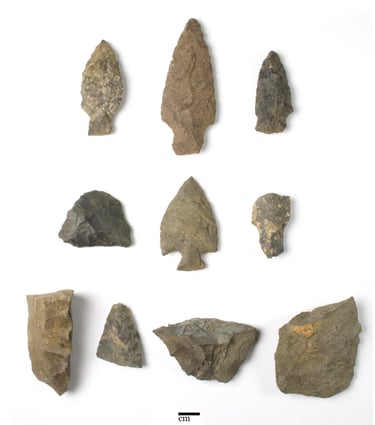
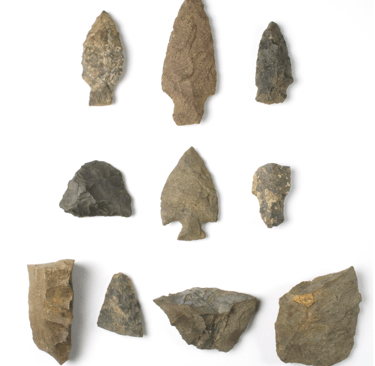
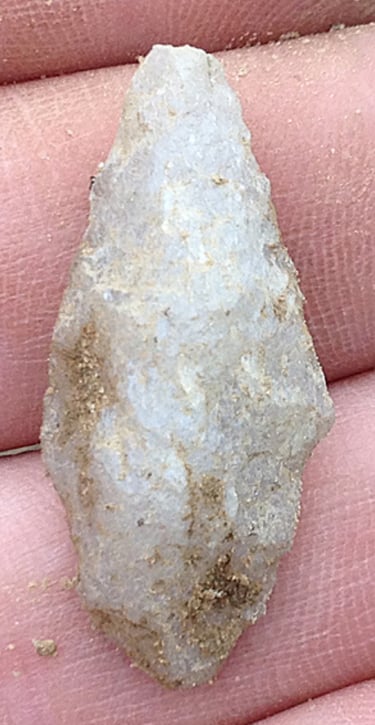
The box also has 3d printed examples of stone projectile points.
The Massachusett tribe used points called projectile points. They could be used for hunting or a knife blade.
Most of the points archeologists have found are usually triangle shaped. We do not know the exact time these were made, almost all belong to before Europeans arrived and took over them.
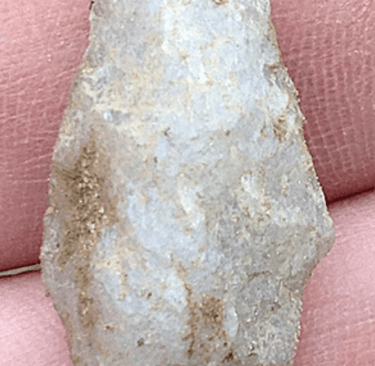
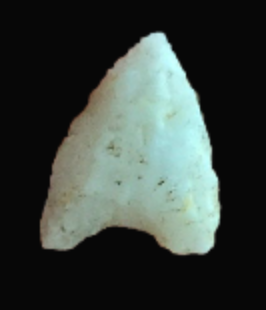
one specific type of point is the squibnocket point.
Squibnocket points are grouped into Squibnocket Stemmed and Squibnocket Triangle. They are from the Late Archaic period.
Stemmed were made from 4000-4500 BP (2250 BCE - 2050 BCE) and Triangle made from 3000-4500 BP (2250 BCE - 1050 BCE).
They were named after the place they were first found which was Squibnocket Pond in Martha’s Vineyard. Both were usually made of quartz or rhyolite. These stones were probably from the Hudson River in NY and gotten from trading.
Did you know?
Archaeologists prefer to use the word "sherd" instead of "shard". Sherd refers specifically to broken pottery at a dig site. Shard can mean broken clay, glass, or china found anywhere.
Through indigenous eyes
What might this piece have been used for?
What materials do you think it's made of?
What clues do you see on the sherd?
What clues tell you what this object might have been used for?
How can you know for sure?
What do you think this object is made of?
Where do you think the people got these materials?
How do you think they made it?
Does it feel smooth, or rough? What does that tell you?
Do you think this object would last a long time? Why or why not?
Through indigenous eyes
Contact
Questions? Reach out anytime!
team@gear-grinders.org
© 2025. All rights reserved.